A padfolio is one of the few promotional or executive gifts that lives on a desk for years, which means the cover material is not a cosmetic choice. It decides whether the piece still looks credible at the third client meeting or whether it has started shedding flakes of its own surface. The writing pad inside is a consumable that gets refilled; the cover is the asset that carries your logo the whole time. Four materials dominate the market, and they behave very differently over their lifespans. Understanding them is the difference between a padfolio that ages into a patina and one that peels within a year, and the gap in real-world durability between the cheapest and the most durable option is measured in years, not months.
Genuine leather: what the premium actually buys
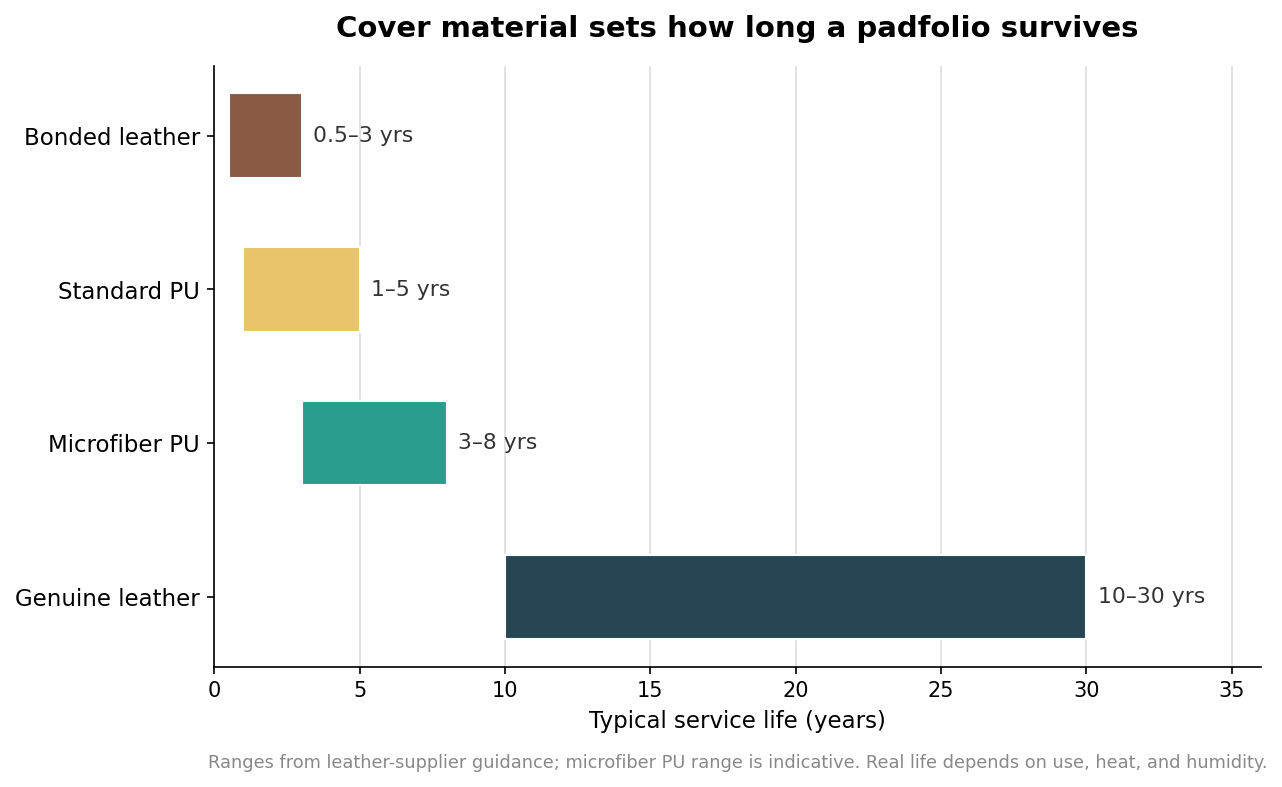
Genuine leather is a single, coherent piece of animal hide, and its structure is why it lasts. The natural collagen fibers resist cracking, scratches tend to blend into a patina rather than becoming permanent defects, and the material breathes, exchanging moisture instead of trapping it. With basic care, a genuine leather cover commonly lasts 10 to 20 years or more, and high-quality hides can stay in service for decades. The tradeoffs are cost and consistency: real hide carries the highest material price, and every panel has unique grain variation, so no two covers are perfectly identical. For a flagship gift or an executive-tier order where longevity and feel are the point, that variability is a feature. For a large uniform run where every unit must match, it can be a complication, and it is worth requesting production samples so you can see how much grain variation to expect before the full order runs.
PU and microfiber: the synthetic workhorses
Polyurethane (PU) leather is a fabric or backing coated with a polyurethane skin that is embossed with a grain pattern. It is far cheaper than hide, completely uniform panel to panel, and easy to keep clean, which is why it dominates promotional padfolios. Its honest limitation is lifespan: standard PU typically holds up for about 1 to 5 years depending on quality and conditions, and because the surface is a coating, it is prone to cracking and peeling at high-stress points like the spine fold and edges, a process that cannot be reversed once it starts. PU is also non-breathable, so trapped moisture in humid environments speeds its breakdown, and covers stored in hot cars or sunny windows tend to fail fastest.
Microfiber leather is the premium end of the synthetic category: an ultrafine fiber base topped with polyurethane, engineered to behave more like real leather. It is more durable and more abrasion-resistant than standard PU while keeping the uniform surface that makes branding predictable, and it typically outlasts ordinary PU by a meaningful margin, though exact figures vary by grade and are best treated as indicative rather than guaranteed. When a buyer wants the consistency and price advantages of a synthetic but needs the piece to survive daily handling, microfiber is usually the upgrade worth paying for, and it often costs only modestly more than standard PU while lasting noticeably longer.
Bonded leather: the label to understand before you buy
Bonded leather causes more disappointment than any other cover material, mostly because its name implies more than it delivers. It is manufactured by shredding leather scraps into fiber, blending that fiber with polyurethane or latex binders, pressing the mix onto a fabric backing, and finishing it with a PU topcoat and an embossed grain. The real leather content is typically only 10 to 30 percent, and the visible surface you touch is the glued-on PU layer, not leather at all. Because that top layer is bonded rather than naturally connected, it separates under heat, humidity, sweat, friction, and UV, so the characteristic failure is peeling and delamination. Expected service life is short, often quoted at roughly six months to three years, which is why bonded leather is best reserved for low-cost, short-cycle giveaways where nobody expects the piece to last. If a supplier offers “leather” at a price that seems too good to be true, confirm whether it is bonded before you commit a large order, and ask directly for the leather-fiber percentage rather than accepting the word leather on its own.
Matching material to budget, lifespan, and branding
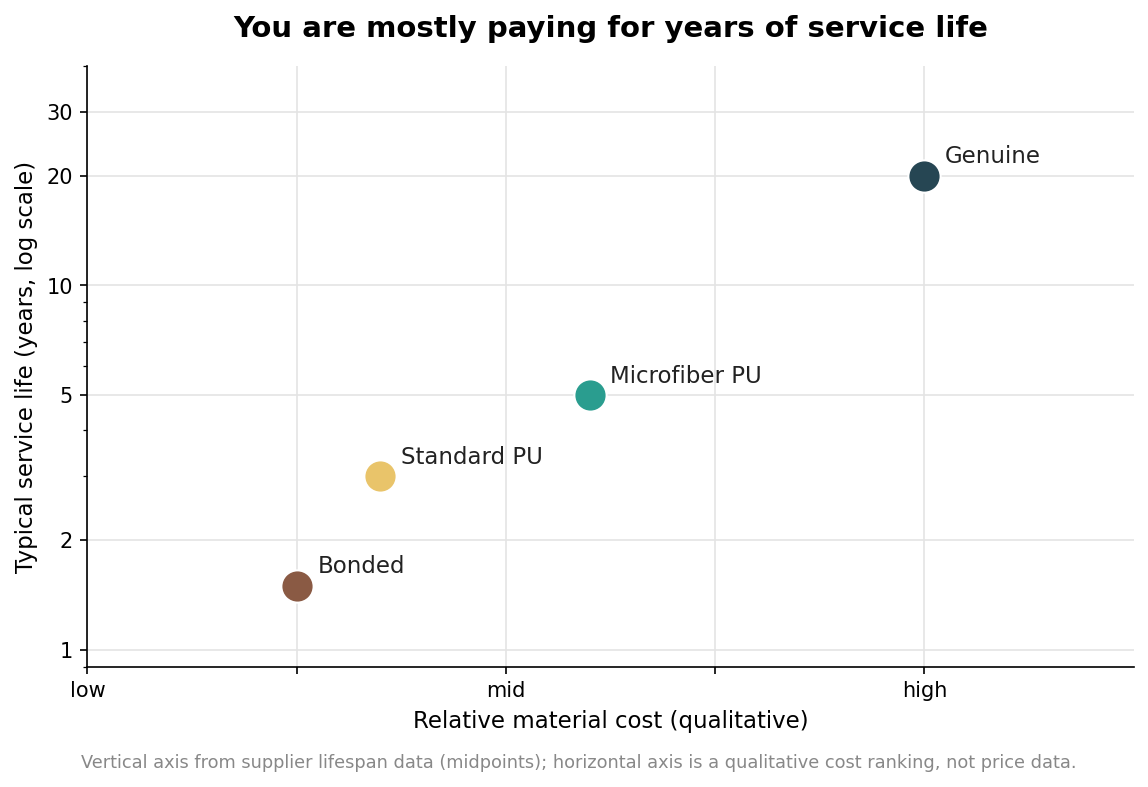
The clean way to decide is to work backward from how long the padfolio needs to look good and how it will be decorated. If it is a keepsake or executive gift meant to last for years and develop character, genuine leather earns its premium and takes debossing and blind embossing beautifully because the hide has real depth to press into. If it is a bulk promotional run where cost per unit and visual consistency matter most, a quality PU or, better, microfiber cover gives you a uniform surface that reproduces a foil-stamped or debossed logo identically across every unit. If the budget only allows bonded leather, go in with eyes open: it photographs well and feels leather-like on day one, but plan for a lifespan measured in months, not years, and avoid it for anything a recipient is meant to keep. Two questions settle most orders: how many years does this need to survive, and does every unit need to look the same? Answer those honestly and the material chooses itself, and your logo rides on a surface that is still intact when it matters.